Proper PET CT scan preparation can make all the difference in your experience and results. Hello! I know today isn’t Wednesday, which is usually when I upload a blog, but today I have my PET-CT follow-up scan. I want to dedicate this post to explaining why this test is done, how it works, and what to expect during the process.
Unfortunately, some doctors assume that cancer patients should go through all their tests and procedures with complete peace of mind. However, reality is quite different. I imagine that after performing so many procedures week after week, the human aspect of explaining what to expect often gets overlooked. So, I’ve decided to do it myself.
Complete PET CT Scan Preparation Checklist
A PET-CT (Positron Emission Tomography with Computed Tomography) is a crucial imaging test that requires proper preparation to ensure accurate results.
1. Bring a recent creatinine test
It’s important to have a recent creatinine test because this parameter measures kidney function. The contrast dye sometimes used in PET-CT scans can affect kidney function. If your creatinine levels are too high, your doctor may decide to avoid using the contrast or take extra precautions. If they don’t ask for a creatinine test at the time of your appointment, they will instead take a small blood sample from your finger to check your glucose levels.
2. Take care of your veins before the exam
If you have weak or difficult veins (like I do), I recommend avoiding unnecessary blood draws or any activity that could weaken your veins for at least two weeks before the exam.
Unfortunately, due to treatments and surgeries, cancer patients often have fragile veins, which can make it harder to administer the radiotracer.
In my case, my right arm has no lymph nodes, so all procedures must be done on my left arm. In some cases, if arm veins are not viable, leg veins can be used instead. At first, this might sound terrifying, but trust me—it’s not as bad as you might think. You get used to everything.
3. Avoid intense exercise 48 hours before the exam
Intense physical activity increases muscle metabolism and glucose consumption, which can cause the radiotracer to distribute unevenly and affect the scan’s accuracy.
4. Avoid exposure to cold temperatures the night before
Cold temperatures trigger involuntary muscle contractions (shivering), which can interfere with how the radiotracer is absorbed and potentially distort the PET scan results.
5. Fast for at least 6 hours before the scan
The radiotracer used in PET-CT (fluorodeoxyglucose or FDG) mimics glucose. If you eat before the exam, your cells will absorb normal glucose instead of the FDG, making the scan less effective in detecting abnormal metabolic activity.
6. Wear comfortable, metal-free clothing
Metal objects can interfere with the scan’s image quality, so avoid wearing jewelry, zippers, metal buttons, or any metallic accessories.
What to Expect During Your PET Scan Procedure
On the day of your scan, arrive at least 30 minutes early to allow time for preparation.
Check-in and Initial Evaluation
You’ll be weighed, and a general assessment will be done.
A small blood sample will be taken from your finger to measure your blood glucose level, as high glucose levels can interfere with FDG absorption.
Injection of the Radiotracer
A small amount of FDG (fluorodeoxyglucose) will be injected intravenously. It’s painless, and you won’t feel anything at all.
Resting Period (about 1 hour)
After the injection, you’ll need to stay in a quiet, dark room with minimal movement. Why? Because the radiotracer distributes according to cellular activity. If you move too much, your muscles will absorb more FDG, which could distort the scan.
In the centers where I’ve had my PET-CT (Miami and Ecuador), this room is usually dark, with a blanket provided. I use this time to meditate, reflect on my journey, and feel grateful for how far I’ve come, beyond medical expectations.
The PET-CT Scan
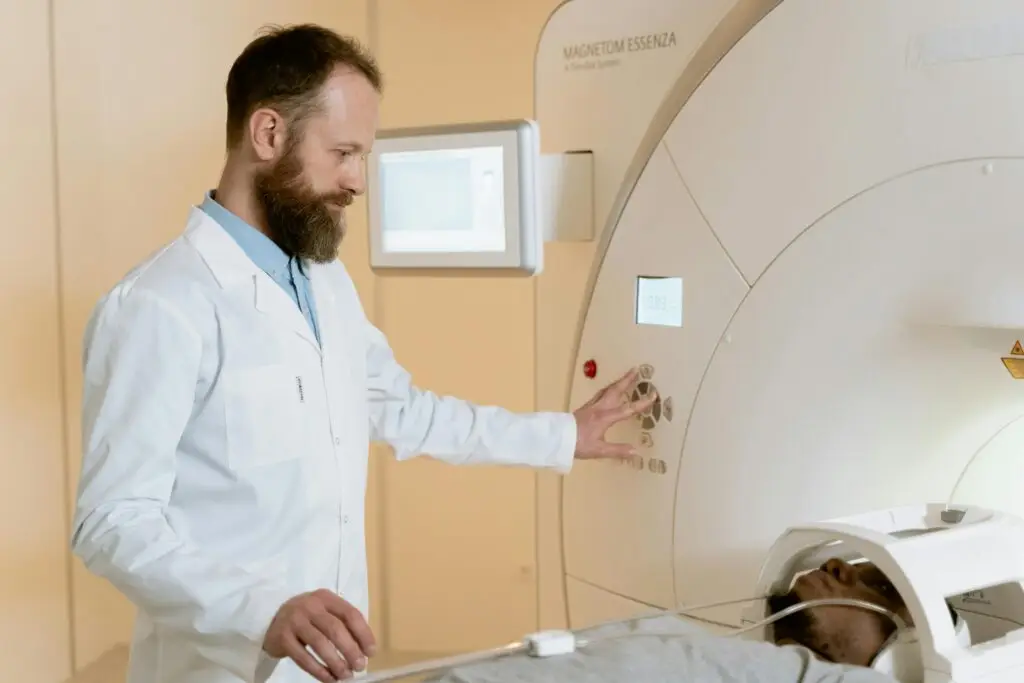
After the resting period, you’ll be taken to the scanner, which looks similar to an MRI machine. You’ll need to lie still for several minutes while the machine captures images of your body.
The medical team in charge of the exam will be there the entire time, guiding you through the process. If you need anything or feel uncomfortable, don’t hesitate to let them know, they will keep you informed and ensure you feel as at ease as possible.
After Your PET Scan: Recovery and Results
If possible, try to take the rest of the day to rest, even though the exam itself isn’t physically demanding, the preparation, fasting, and stress can be draining.
Additionally, if you live with small children or pregnant women, it’s best to use a separate bathroom for a few hours after the exam. This is because the radiopharmaceutical used in the PET-CT scan emits low levels of radiation, which can be excreted through urine. While the exposure is minimal, it’s recommended to take precautions to avoid unnecessary radiation exposure to vulnerable individuals.
You can resume eating and drinking normally unless your doctor advises otherwise.
Drink plenty of water to help flush out the radiopharmaceutical from your system.
There are no major side effects, but you may feel tired from fasting and the stress of the exam.
Your results won’t be immediate, your doctor will review them and schedule a follow-up appointment to discuss the findings.
Managing PET Scan Anxiety: A Patient’s Perspective
I believe the most crucial part of any medical procedure is reducing the anxiety caused by waiting. In my case, this test is a major milestone because it represents a step closer to my “graduation” from treatment.
Even though this is my sixth PET-CT scan, and my anxiety has lessened over time, I still have to be very conscious of not letting intrusive thoughts take over. It helps me to focus on the times I thought I wouldn’t make it, yet in the end, I did, like when I faced radiation therapy or when I struggled to control my fears about the future.
Instead of letting my mind spiral into “what ifs,” I remind myself to stay present, take things one step at a time, and focus only on today. I find the AA phrase, “One day at a time,” incredibly helpful. It grounds me, reminding me that I don’t have to figure everything out at once, I just have to get through this moment, this day.
I always say that a PET-CT is like a final exam, the results must be perfect so that I can finally hear the words “You’re done with treatment!”. No more changes, no more adjustments, just the conclusion of this chapter.
I’m eagerly awaiting the day of my graduation from treatment.
PET Scan vs PET CT: What’s the Difference?
A PET scan uses radioactive glucose (FDG) to detect metabolic activity, while PET CT combines this with detailed anatomical images from CT scanning. This combination provides more precise tumor location and staging information for cancer patients.
I know the procedure may vary slightly between different centers, but overall, this is what happens during a PET-CT. I hope this guide helps you approach this step with more confidence and peace of mind.
Your PET CT Scan Preparation: Final Thoughts
Understanding proper PET CT scan preparation transforms anxiety into confidence. As someone who has navigated six PET scans, I can assure you that preparation and knowledge make all the difference in your experience.
Essential PET Scan Preparation Reminders:
- Fast for 6+ hours before your appointment
- Avoid intense exercise 48 hours prior
- Bring recent creatinine test results
- Wear comfortable, metal-free clothing
- Stay warm the night before
- Arrive 30 minutes early
What to Remember During Your PET Scan:
The procedure itself is painless, but the emotional weight can be significant. Use the quiet waiting time for meditation, gratitude, or gentle breathing exercises.
Post-PET Scan Care:
Rest, hydrate well, and be patient with results. Remember that this scan is providing crucial information to guide your treatment and recovery.
Are you preparing for your first PET scan? Share your questions or concerns in the comments below. Your questions help other cancer patients feel less alone in this journey.
Related Resources:
Remember, every PET scan is a step forward in your healing journey. You’ve got this, and you’re not alone.
With love, Ana
Medical Note: This information is based on personal experience and should not replace medical advice. Always follow your healthcare team’s specific instructions for PET scan preparation.
With love Ana!