
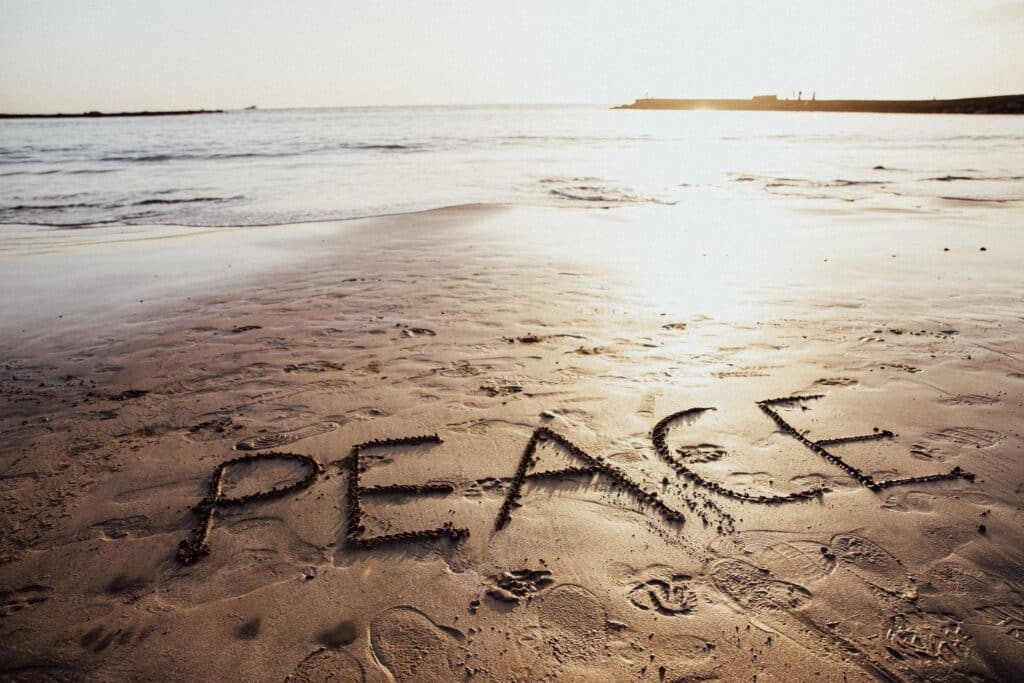
7 Powerful Truths About Peace No One Told You is that is not always happiness. Sometimes is simply no longer fighting yourself from the inside.
That truth can feel surprisingly emotional. Many people imagine peace as constant joy, lightness, or feeling good all the time. But inner peace is often much quieter than that. Sometimes it looks like accepting what you feel without trying to punish yourself for it. Sometimes it looks like resting instead of forcing. Sometimes it looks like no longer arguing with your own emotions, your own needs, or the season of life you are in.
On With Love Ana, NURA is presented as a guided emotional wellness companion that helps people understand emotions, notice body signals, and build healthier mental habits through reflection, and the site also offers the Emotional Clarity Test as a first step toward self-understanding. It also makes clear that NURA is support for wellbeing, not medical diagnosis or treatment.
What No One Told You About Peace
Peace does not always arrive as excitement, pleasure, or visible happiness. Sometimes it arrives as relief.
It may be the relief of no longer forcing a relationship that keeps hurting you. The relief of no longer pretending you are fine when you are not. The relief of no longer measuring your worth by how much you do, fix, or carry for other people. Peace can be very simple. It can be the moment your inner world stops pulling in opposite directions.
That is why is not always dramatic. It is not always a big breakthrough. Sometimes it is a subtle shift from inner pressure to inner permission. From self-judgment to self-honesty. From emotional war to emotional space.
7 Powerful Truths About Peace No One Told You and Why Peace Is Not Always the Same as Happiness
Happiness and peace can overlap, but they are not the same thing.
Happiness is often linked to pleasure, enjoyment, excitement, or a positive emotional state in a moment. Peace is often deeper and steadier. You may not feel thrilled, but you may feel settled. You may still feel grief, but you are no longer resisting the fact that grief is there. You may still have unanswered questions, but you are not tearing yourself apart trying to solve everything at once.
Research on inner peace argues that peace contributes something distinct to human flourishing, beyond just happiness or life satisfaction, and proposes inner peace as its own meaningful dimension of wellbeing.
That matters because many people think they are failing if they are not happy all the time. But healing does not always look like happiness. Sometimes it looks like less inner conflict.
Peace can exist even in a season that is still tender, uncertain, or emotionally real.
Why Peace Can Feel Like Ending the Inner Fight
One of the deepest forms of peace is the moment you stop fighting yourself.
That can mean:
- no longer shaming yourself for feeling emotional
- no longer calling yourself weak for needing rest
- no longer forcing clarity before it is ready
- no longer staying in a pattern just because it is familiar
- no longer demanding that healing look prettier than it does
For many people, the hardest battle is not with life itself. It is with the way they speak to themselves while life is happening. Inner peace begins to grow when that harshness softens.
This does not mean giving up on growth. It means growing without violence toward yourself.
Peace often starts when self-punishment stops feeling normal.
A Biodecoding Perspective on Peace
From the perspective of biodecoding, emotional tension may shape how a person experiences stress, body signals, and internal conflict. This does not replace medical care, diagnosis, or treatment. It is simply a reflective lens that can help someone explore where they may be holding emotional pressure.
Seen through that lens, peace may not always mean the absence of challenge. Sometimes it means the absence of internal contradiction. When a person keeps saying yes while feeling no, keeps performing while feeling exhausted, or keeps silencing emotions that need attention, the system can remain in tension. Peace may begin when that inner contradiction starts to reduce.
Some people notice that when they stop fighting themselves so much, they also feel lighter in the body. Tension may soften. Breathing may feel deeper. Rest may feel more possible. That does not mean every physical sensation has one emotional explanation. It simply reminds us that emotional strain and physical experience often interact.
What Research Says About Mindfulness and Psychological Wellbeing
Research on mindfulness helps support this broader view of peace. A widely cited review concluded that mindfulness is associated with increased subjective wellbeing, reduced psychological symptoms, and improved emotional regulation.
More recent research also found that dispositional mindfulness was associated with greater hope and life satisfaction, with meaning in life helping explain part of that relationship.
This matters because mindfulness is not just about feeling calm. It is also about learning how to relate to your inner experience with more awareness and less automatic resistance. In simple terms, peace may grow not because life becomes perfect, but because your relationship to yourself becomes less combative. That is one reason mindfulness is often described as promoting improved self-awareness, emotional regulation, and psychological wellbeing.
https://pmc.ncbi.nlm.nih.gov/articles/PMC6795685
A Gentle Invitation to Take the Clarity Test
If this feels familiar, and you have been feeling emotionally overwhelmed, disconnected, or tired of carrying so much inner tension, the NURA Emotional Clarity Test can be a gentle place to begin.
On the With Love Ana site, the test is presented as a simple first step to help you explore what you may really be feeling and why. It can be a helpful way to begin putting words to what has been living quietly beneath the surface.
How NURA Can Support Emotional Clarity
NURA was created for people who want more emotional clarity, not more self-pressure. On With Love Ana, it is described as a guide to help users understand emotions, interpret body signals, and build healthier mental habits through reflection. That kind of support can be especially meaningful when peace feels far away, because peace often begins with understanding what you are actually carrying.
Sometimes it is simply no longer fighting yourself.
Sometimes it is letting yourself feel what is true without turning it into another reason to be hard on yourself. Sometimes it is no longer forcing, no longer pretending, no longer carrying pressure that was never helping you heal. Sometimes it is just the quiet relief of becoming gentler with your own heart.
And maybe that is what makes peace so beautiful. Not that it always feels bright, but that it feels honest.